Archaeologist challenges view that ruler linked to Roman invasion was a king
Dr Miles Russell argues that Verica may have been a woman, but other specialists question his interpretation of ancient coins and language.
By Thomas Schneider ·
The British ruler whose appeal to Rome helped bring about the invasion of Britain in AD43 may have been a queen, according to an archaeologist challenging the established account. Dr Miles Russell, director of archaeological fieldwork at Bournemouth University, argues that evidence associated with Verica warrants a reassessment, though other experts remain sceptical.
Verica, a Romanised Briton, governed the Atrebates, whose territory included areas of present-day southern Hampshire and West Sussex. Following the death of the powerful tribal leader Cunobelinus and the rise of his son Caratacus, Verica was driven into exile and sought refuge with Emperor Claudius in Rome. Roman forces subsequently landed in Kent. Russell considers Verica central to the decision to invade.
Russell, whose arguments will feature in his forthcoming book, Caratacus: Great King of Britain, points partly to language. Latin names ending in “a” frequently belonged to women, he says. He also argues that abbreviated coin inscriptions interpreted as identifying someone as a son could equally identify a daughter.
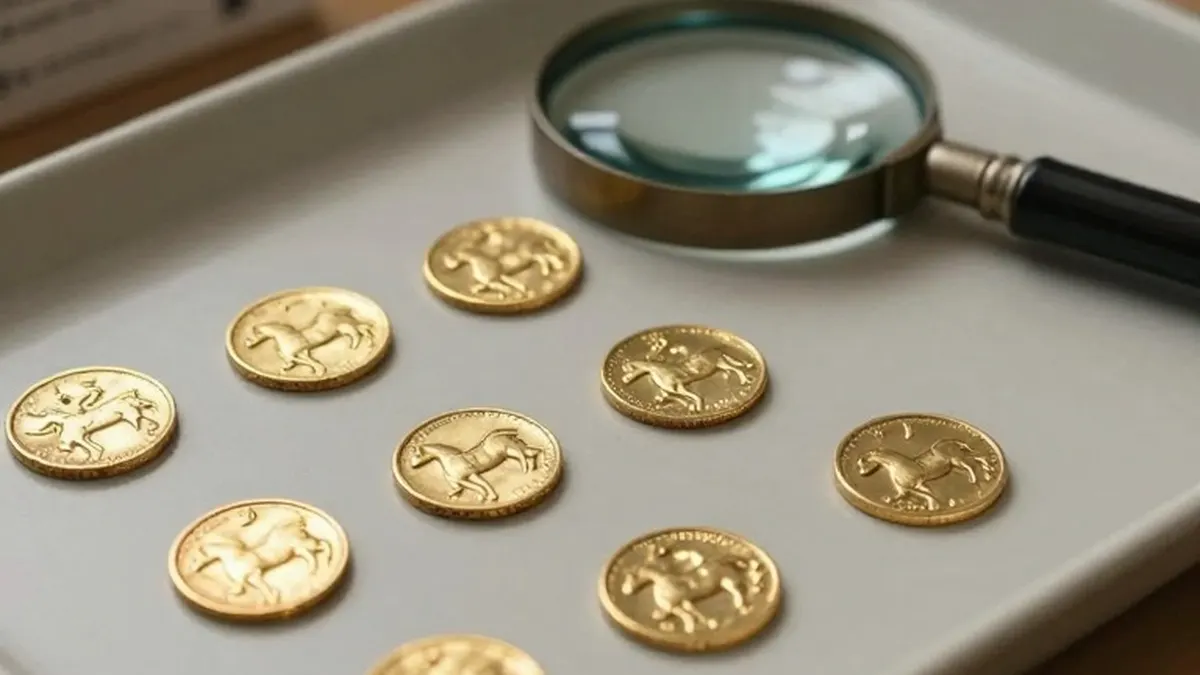
Another strand of his argument concerns the title Rex, which appears on Verica’s coins. Russell says the term described close allies at the Roman empire’s boundaries during the late first century BC and early to mid first century AD, without necessarily specifying their sex. He also interprets a naked rider on some of Verica’s coins as female, contrasting it with explicitly male horse riders on coins issued under Cunobelinus and Caratacus.
Russell links his theory to earlier research by his team showing the importance of women in iron age society. He also sees it as consistent with the Roman writer Cassius Dio’s criticism that Claudius was susceptible to influence from women and slaves.
Prof Roger Tomlin, an Oxford-based archaeologist specialising in Latin texts and epigraphy, said male Latin names could also end in “a”. However, he regarded the existence of the masculine name Vericus as the strongest linguistic support for interpreting Verica as feminine. Dio nevertheless treated the ruler as male, calling him Bericus. Russell suggests the name could have become confused through generations of translation and transcription, noting that Dio wrote more than two centuries after the events.
Tomlin also questioned whether Rex was used for rulers of either sex, saying Russell needed examples to establish that claim. Nor, he argued, would a seemingly bare-breasted warrior on a coin establish the ruler’s identity. He compared that reasoning with treating the male horseman slaying a dragon on Queen Victoria’s gold coins as evidence that Victoria was male.
Dr Daphne Nash Briggs, an iron age archaeologist and coin specialist, raised further objections. Some coins named for Verica show an unmistakably male rider, she said, while others appear to depict Verica wearing male priestly clothing or showing an Adam’s apple. Russell disputes those readings, arguing that the head depicts the emperor and that neither the identity nor the sex of the figure in priestly clothing is certain.
Russell acknowledged that his interpretation could provoke disagreement, but welcomed further scrutiny of the established narrative. “We need to have this discussion,” he said.
Source: The Guardian