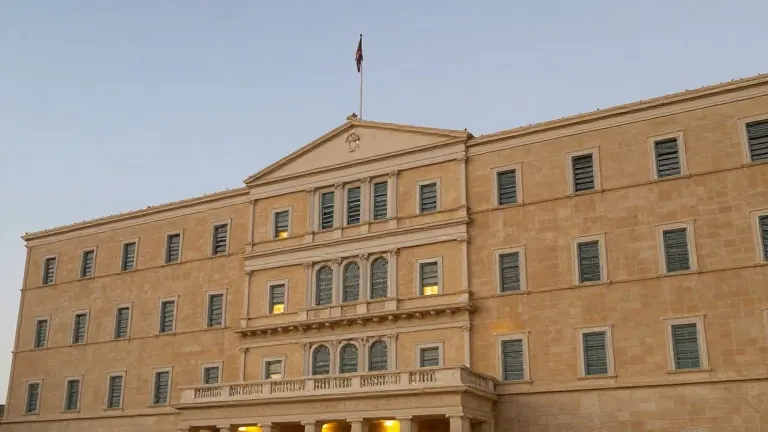
Netanyahu and Army Chief Clash Over Iran Orders Ahead of Vote
Dispute erupts days before elections as opposition calls for treason probe and women's Knesset representation is projected to fall.
By Luca Stewart ·
Prime Minister Benjamin Netanyahu and Chief of Staff Eyal Zamir engaged in a sharp disagreement on Sunday regarding a military instruction that could lead to conflict with Iran. The exchange occurred just days before Israel's legislative elections, creating a tense political backdrop for the upcoming vote.
Channel 12 News reported that Zamir challenged the order, requesting legal assurances before any military action was taken. While the report did not specify the details of the instruction, sources familiar with the dispute said senior military officials believed the political leadership was using the Iranian issue to gain momentum. They expressed concern that the prime minister's motives were political rather than purely strategic.
Netanyahu and Defence Minister Israel Katz denied the existence of such a conflict. Katz posted on X on Monday that Israel had no intention of attacking Iran before Tuesday's election. The dispute emerged alongside reports that Netanyahu had discussed resuming a joint US-Israeli campaign against Iran with President Donald Trump.
Opposition leaders reacted quickly to the news. Gadi Eisenkot, Netanyahu's main challenger, warned on X that the prime minister should not place political interests above state security. Avigdor Lieberman, a partner in Eisenkot's bloc and leader of the right-wing Yisrael Beiteinu party, used stronger language. He told Radio 103FM on Monday that Netanyahu was betraying the country by dragging it toward war. Lieberman said he would seek an investigation into the prime minister on charges of treason.
The election is also set to see a decline in female representation in the Knesset. A report by the women's magazine LaIsha estimated that only 31 women will enter the 120-seat parliament. This number is well below the record of 45 women elected in March 2021 and lower than the 35 women in the current Knesset. Most of the projected female members will come from Zionist opposition parties, including Eisenkot's Yashar, Bennett's Together, and Lieberman's Yisrael Beiteinu.
In contrast, Netanyahu's coalition is expected to send only six women to the Knesset. The ultra-Orthodox parties Shas and United Torah Judaism will send none, as they restrict candidacies to men. The Palestinian-led parties Ra'am and the Joint List are projected to elect only two women. This distribution highlights a widening gap between the opposition and the government bloc regarding gender representation.
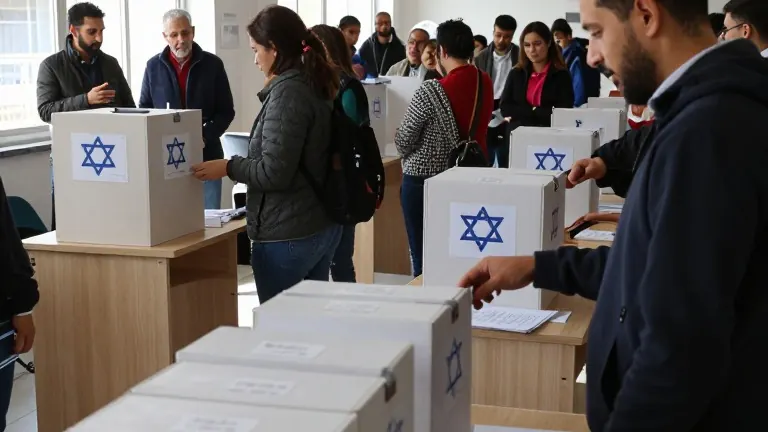
Approximately 90,000 Israelis living abroad are currently in the country to vote, according to the economic daily Calcalist. Estimates from an Israeli telecoms company suggest this number could rise to 111,000 by election day. This surge represents an increase of roughly 94,000 compared to typical periods. The company attributed the spike to the elections, noting that few travelers arrive in mid-October for other reasons.
This return coincides with a significant trend of emigration, with around 270,000 Israelis leaving the country since 2023. Channel 13 News provided a similar estimate based on Ben Gurion Airport data. The outlet noted that while 90,000 votes could equate to roughly two Knesset seats, the arriving group includes children who are not yet eligible to vote.
Source: Middle East Eye