
Oil drops 4% as Iran says Hormuz deal could come in days
Brent crude fell to $109 a barrel on Monday, while Asian markets moved in different directions after U.S. stocks posted their worst day since June.
By Luca Stewart ·
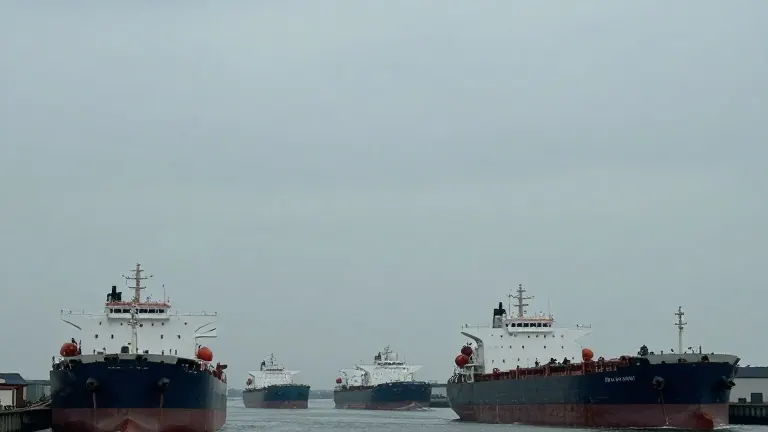
Oil prices fell sharply Monday as diplomatic talks in Qatar offered a potential path to reopening the Strait of Hormuz. Brent crude, the international benchmark, dropped 3.9% to $109.01 per barrel. U.S. crude gave up 4.1% to $99.82 a barrel. Iran’s top diplomat said in an interview on his Telegram channel over the weekend that the waterway could reopen within two days if the U.S. meets several conditions. He noted that no direct talks were being held with the U.S. at that time.
Stock markets showed mixed results globally. In Asia, South Korea’s Kospi index rose 2.2% to 5,859.08. Samsung Electronics shares added 1.8%, and SK Hynix jumped 3.8%. Conversely, Japan’s Nikkei 225 slipped 0.3% to 63,081.86. Kioxia Holdings shares plunged 15.8% after its earnings forecasts disappointed investors. SoftBank Group, an investor in OpenAI, saw its shares drop 1.6%.
In Europe, trading was flat. Britain’s FTSE 100 edged down 0.1% to 10,721.94. Germany’s DAX and France’s CAC 40 each climbed 0.1%. U.S. futures advanced after Wall Street stocks fell Friday to their worst level since June. The S&P 500 dropped 1.8% on Friday, and the Nasdaq composite declined 2.9%.
Investors are questioning whether massive spending on artificial intelligence will yield quick profits. Last week, earnings reports from Alphabet Inc. and Amazon raised concerns about their AI-related costs. Sunil Tirumalai at UBS Global Research wrote in a recent note that the debate is entering a new phase. He said investors have become distinctly more nervous about a handful of companies with weaker balance sheets or bigger financial commitments, rather than the sector as a whole. Tirumalai stated that some cracks have appeared and that the question is whether all the money being spent can generate adequate financial returns.
China’s markets rose despite a report that factory activity returned to contractionary territory in October. The Shanghai Composite index was up 1.1% to 3,638.03. China’s central bank said Monday that it would deploy around 100 billion yuan, or $15 billion, under a new swap facility. The facility will provide dozens of financial firms with more liquidity to invest in the market. The central bank and its securities regulatory body met with financial institutions to discuss ways to support the markets.
Apple is due to report its latest earnings results later in the day. Investors are also watching for the outcome of Tuesday’s U.S. midterm elections. Voters across the political spectrum have shown increasing concerns about AI and data centers, along with inflation. The U.S. dollar rose to 157.64 Japanese yen from 157.49 yen. The euro traded at $1.1236, up from $1.1160.
Oil prices remain much higher than the roughly $72 a barrel level seen in late February before the war. Uncertainties surrounding the situation in the Middle East continue to pressure global oil supplies. The Strait of Hormuz is a key waterway for global oil transport. The final outcome of the diplomatic efforts to avoid a return to all-out war depends on answers provided by the United States to the Iranian questions.
Source: MySA
More Business · Customer Complaints · Report a business · Got a Story?