Taiz Residents Turn to Firewood and Rice as Road Closures Bite
Two land routes into Yemen's third-largest city were cut off in early October, sending fuel and food prices climbing for its 1 million residents.
By Thomas Schneider ·
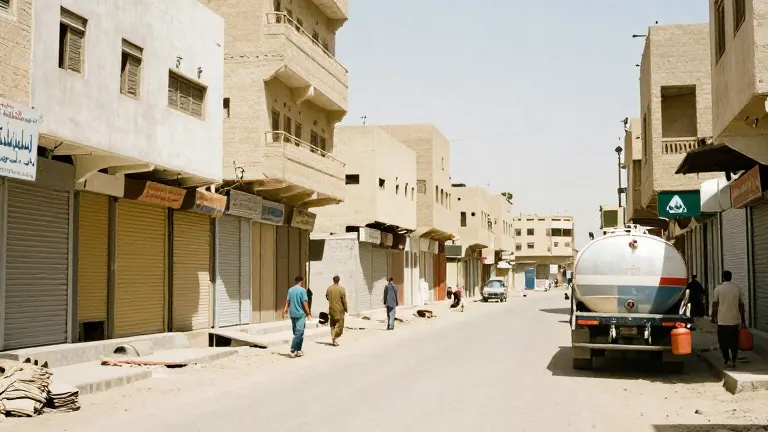
Families in Taiz are down to rice and beans, cooking on scavenged firewood, and sleeping on hospital floors as a siege that began in early October cuts the city off from its roads. Taiz is Yemen's third-largest city, home to about 1 million people within a national population of roughly 43 million.
Yousef Farhan, a 39-year-old father of four, said his household now eats little else. "The whole day, we either eat rice or beans, whether in the morning or in the evening," he said. Shelling forced his family from their home years ago, and they have since lived in a school in the Wadi al-Qadi zone. Farhan once sold cucumbers from a cart outside the school, pulling in 4,000 to 5,000 Yemeni riyals, or $2.50 to $3.20, a day, enough to buy a monthly gas cylinder. After the school shut, that income vanished and the family turned to firewood.
Taiz lost both of its land routes in early October. Houthi forces took the town of al-Turbah by October 4, closing the Taiz-Al-Turbah-Aden road, the main artery for goods. A day earlier, troops loyal to the internationally recognised government shut the eastern al-Houban crossing into Houthi-held territory, citing attempted Houthi incursions there.
On October 20, United Nations officials reported that road closures and insecurity were blocking vital supplies. They said prices for the food and fuel still reaching the city had more than doubled, and that water production in Taiz had fallen by half. The city's fuel stations have been shut since October 5.
Price checks put 20 litres of petrol at 120,000 riyals, or $77, against 30,000 riyals, or $19, last year. Diesel over the same volume rose from 46,000 riyals to 90,000 riyals, and a cooking gas cylinder from 11,400 riyals to 40,000 riyals. Bus fares climbed from 200 riyals to 500 riyals. Diesel runs the water pumps, hospital generators and ambulances; petrol moves people to work and to care.
Tanker deliveries of water now cost about three times what they did before fighting escalated, according to UN officials. Local authorities say access restrictions keep tankers from the Al-Dhabab basin, a source of drinking water, out of the city.
Sayyun Burhan, 40, said her family lives "day-to-day, waiting to see how the next day will pass." Her husband's job at a local store ended, and poor health keeps him from other work, while rent, food, water and cooking gas still come due. Her children stay indoors. "They have been deprived of schooling and play," she said.
The World Health Organization warned on October 22 that 42 health facilities in Taiz were short of fuel, oxygen, medicine and medical supplies. Fatima Khaled, 55, has kidney failure and cannot afford trips from her village west of the city or a room near the hospital, so she sleeps on the floor of the dialysis hall at Al-Jumhuri General Hospital. "I feel like I am imprisoned here. We have no housing or shelter here. This hall is our shelter," she said.
Source: Al Jazeera