Federal Regulators Propose Mandatory Cyan Lights for Driverless Vehicles
The National Highway Traffic Safety Administration has introduced a draft rule requiring autonomous cars to use distinct blue-green lighting to indicate they are operating without a human driver.
By John Laurent ·
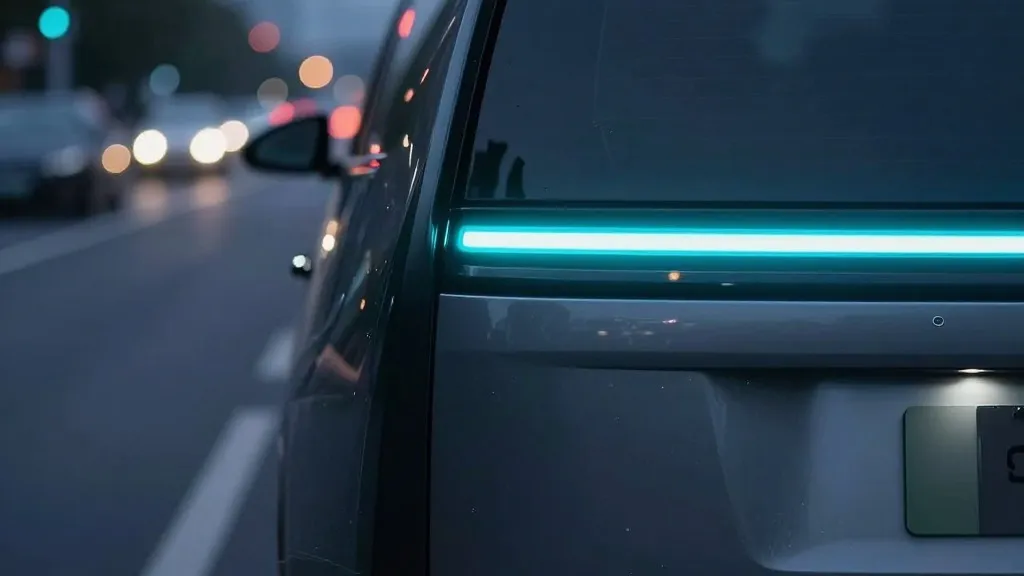
The National Highway Traffic Safety Administration has proposed a standardized visual signal for autonomous vehicles, specifically mandating the use of cyan-colored marker lamps to indicate that an automated driving system is in control. This regulatory move aims to resolve a long-standing industry debate regarding how robotaxis should communicate their status to surrounding traffic, replacing fragmented proposals like flashing text or audio alerts with a single, consistent federal standard. By adopting a blue-green hue, the agency intends to create a clear visual distinction from traditional vehicle lighting, which currently utilizes red, amber, white, and emergency vehicle colors.
The proposed changes to Federal Motor Vehicle Safety Standard No. 108 are designed to modernize regulations for human-free vehicle designs. NHTSA argues that cyan fills a visual gap in the current spectrum, allowing law enforcement officers and other road users to instantly recognize when a car is operating autonomously. While the cyan lights would remain optional for manufacturers, the agency seeks to establish uniform rules for their color, brightness, and placement. This standardization prevents a confusing patchwork of different signals if multiple automakers and robotaxi operators, such as Waymo, Zoox, and Nuro, adopt the technology.
There is existing precedent for this type of signaling, as Mercedes-Benz previously received state-level approval for turquoise lights on its Level 3 Drive Pilot vehicles. Although the automaker has since shifted strategy toward a Level 2++ system, the federal proposal aims to create a national framework that can be applied uniformly across the industry. This includes major manufacturers like GM and Mercedes, as well as dedicated robotaxi services, ensuring that the visual language of autonomous driving remains consistent regardless of the vehicle brand.
Beyond adding new lighting requirements, the rule proposal seeks to remove outdated mandates that do not apply to vehicles without human drivers. NHTSA is looking to eliminate requirements for physical hazard switches, manual beam shifters, and internal turn levers. Additionally, the agency proposes updating the 12.8-volt testing standard to accommodate modern LED architectures, reducing administrative burdens for automakers. The proposal also considers removing rules that dictate the vertical positioning of high-beam and low-beam lights, further streamlining the design process for autonomous platforms.
This initiative is part of a broader Department of Transportation effort to streamline the deployment of autonomous vehicles. By clarifying regulations, the government aims to facilitate the construction of cars that lack traditional human controls, such as steering wheels and pedals. The goal is to remove regulatory friction that has historically slowed the transition from human-operated to fully automated vehicle designs, allowing for faster market entry of new autonomous technologies.
Despite these efforts to modernize standards, regulators are simultaneously enforcing existing rules strictly. Last month, NHTSA initiated an audit query regarding the Tesla Cybercab to review the technical data and processes used during its certification. The inquiry focuses on the vehicle's lack of specific design features, including sideview mirrors, pedals, and a steering wheel, which are currently required under FMVSS. This dual approach highlights the ongoing tension between updating regulations for new technology and enforcing current safety standards until they are formally revised.
Source: The Verge · original report published