Launch Sector Funding: Reaction Dynamics targets $350 million to expand workforce
The Canadian startup aims to scale its team from 68 to over 350 employees to support its Aurora and Borealis rocket development timelines.
By Thomas Schneider ·
The commercial space sector continues to see significant shifts in capital allocation and operational strategy this week, with major players adjusting their market positions. While established giants navigate complex government contracts, emerging firms are aggressively pursuing growth capital to secure their place in the launch market.
Reaction Dynamics, a prominent Canadian launch startup, has announced it is seeking to raise $350 million. This funding round is designed to support a substantial expansion of its workforce, with the company planning to grow its staff from 68 to more than 350 people. The capital injection underscores the increasing importance of human capital in the competitive landscape of small and medium-lift rocket development.
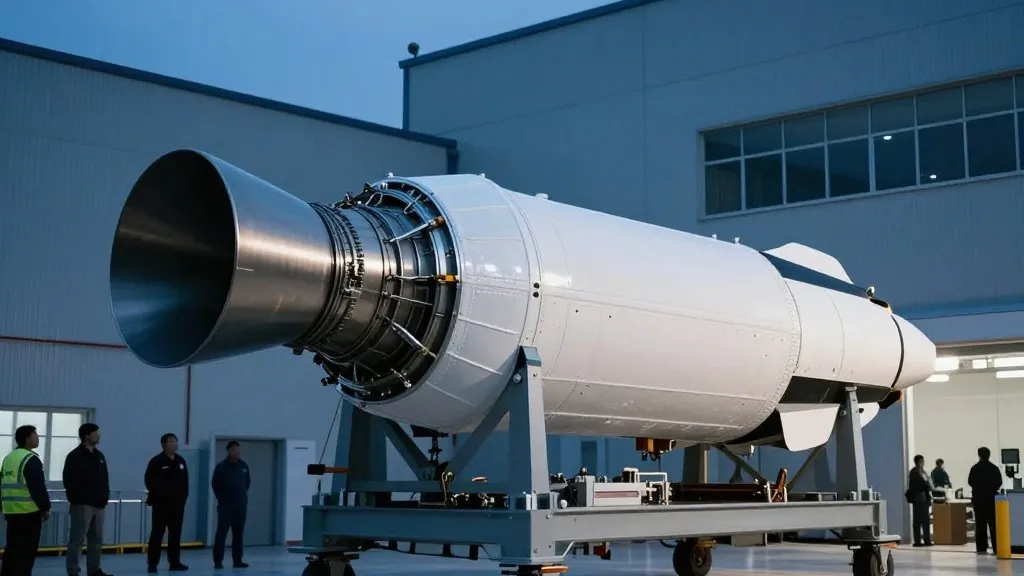
The company is currently developing the Aurora, a small-lift rocket that it hopes will reach orbit by 2028. In addition to this near-term goal, Reaction Dynamics has outlined plans for a medium-lift vehicle known as Borealis, which is targeted for a debut by 2031. The dual-vehicle strategy allows the firm to address different market segments while leveraging shared engineering and manufacturing infrastructure.
Meanwhile, Spanish company PLD Space is nearing the final integration of its Miura 5 rocket, which is scheduled for its inaugural launch next year. According to CEO Raúl Torres, the company has already manufactured three Miura 5 units, with two dedicated to qualifying key system elements. The third vehicle is the primary candidate for the first flight, which is now targeted to occur before mid-2027.
Torres noted that producing these three vehicles has allowed their teams to work continuously across different production and integration stages. This approach enables the direct application of lessons learned from each qualification campaign to the final launch vehicle. One Miura 5 second stage is now fully integrated at PLD’s Teruel test facility, where it is undergoing system-level testing under representative operating conditions, including a wet dress rehearsal and a static hot-fire test.
On the U.S. side, SpaceX provided a notable update regarding its relationship with the U.S. Space Force. The company declined three offered military launch contracts, signaling a strategic shift in how it approaches government business. This decision comes as SpaceX continues to refine its civil space operations, specifically concerning the Starship program. A NASA safety panel indicated that Starship may require up to 22 refuelings to support a lunar landing, highlighting the technical complexities involved in heavy-lift lunar missions.
These developments illustrate a broader trend in the industry: established companies are re-evaluating their contract portfolios, while new entrants are scaling rapidly through significant funding rounds. As the market matures, the focus is shifting from mere launch frequency to the efficiency and reliability of the underlying systems, with companies like PLD Space and Reaction Dynamics investing heavily in the engineering processes that will define the next decade of space access.
Source: Ars Technica · original report published
More Business · Customer Complaints · Report a business · Got a Story?