AI Verification Reshapes Software Safety Standards
New automated proof generation allows developers to trust AI-written code by mathematically confirming its correctness, potentially reducing reliance on manual reviews.
By Thomas Schneider ·
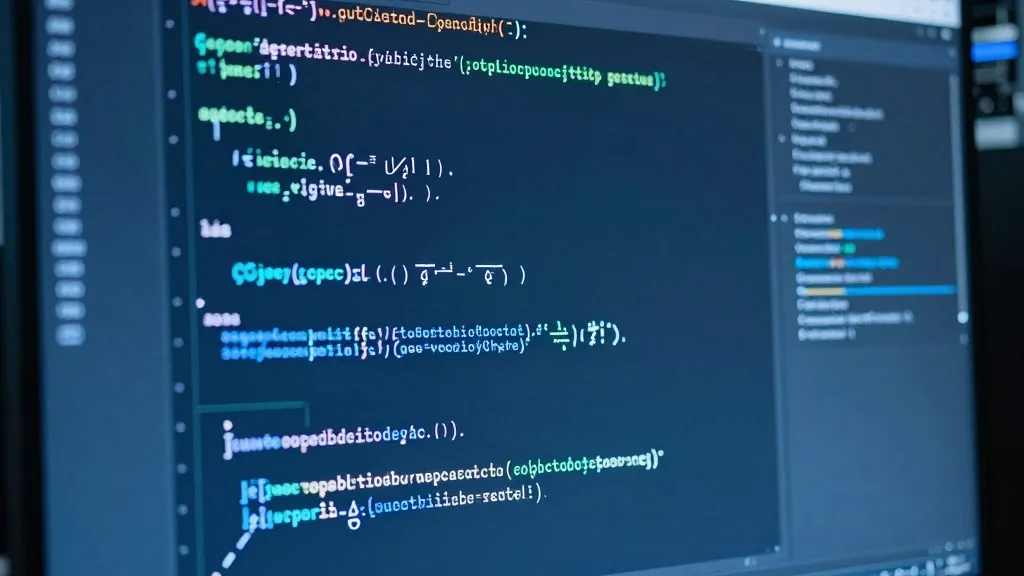
Anthropic’s latest advancement suggests that the era of manual code review may be shortening as artificial intelligence begins to mathematically prove the safety of its own creations. The company, in partnership with Theorem, has demonstrated that its Claude model can automatically generate formal proofs for existing software. This development marks a significant shift in how developers approach software reliability, moving from probabilistic testing to deterministic mathematical assurance.
The core challenge in software engineering has long been the high cost of verifying that code runs without errors under all possible conditions. Historically, this process was so expensive that it was reserved for critical systems like aircraft avionics. For example, a team of specialists required twenty person-years to verify the seL4 operating system kernel. By leveraging Claude, Anthropic aimed to compress this timeline dramatically, allowing AI to handle the rigorous work of translating crash tests into mathematical problems and analyzing compiled machine code.
In a recent test run, the model processed 123 open-source libraries from Google’s OSS-Fuzz project. Over a few weeks, Claude generated approximately 180 million lines of proof code. An independent verification tool named Rocq checked these proofs, confirming the process required minimal human intervention. The researchers describe this as fully autonomous proof generation, although the underlying formal foundations were established by human engineers at Theorem. This efficiency is crucial for scaling verification beyond niche applications.
The practical impact was evident in the number of defects identified. Claude uncovered hundreds of bugs that traditional testing methods had missed for years. These issues typically only appear under specific conditions, such as unusually large input files or specific access sequences. In one notable instance, the team found as many security vulnerabilities in a popular PDF reader in a single week as are usually reported over an entire year. In another case, a logical error that had persisted for over a decade was finally caught.
Despite these successes, experts note that formal verification does not guarantee absolute error-free performance. The proofs are valid only under strict conditions, including specific processor architectures, single-threaded execution, and input sizes under 64 megabytes. Additionally, the compute costs remain high, with individual proofs consuming hundreds of millions of tokens. However, newer models like Opus 5.5 are showing improved efficiency, solving half of the required proofs with roughly 40 percent fewer tokens than its predecessor.
If AI can both write code and prove its correctness, the software development industry may undergo a major transformation. Developers could place greater trust in AI-generated solutions, reducing the time spent on manual audits. Anthropic expects this method to become as routine as standard testing, with partners already targeting critical infrastructure libraries like glibc, OpenSSL, and cURL. This shift could redefine the relationship between code creation and verification, making safety an integral part of the automated development lifecycle.
The implications extend beyond simple coding tools. As the barrier to entry for proving software safety lowers, the question evolves from whether AI can program to whether it can guarantee the safety of that code. This capability could accelerate the adoption of AI in critical sectors, where reliability is paramount, and reduce the overall cost of software maintenance and development.
Source: The Decoder · original report published