Trump Terminates Oil Drilling Methane Rule, Citing $45 Billion Savings
The administration's move eliminates inspection mandates for existing wells and scrubs a fee structure that environmental groups say will increase atmospheric pollution.
By Luca Stewart ·
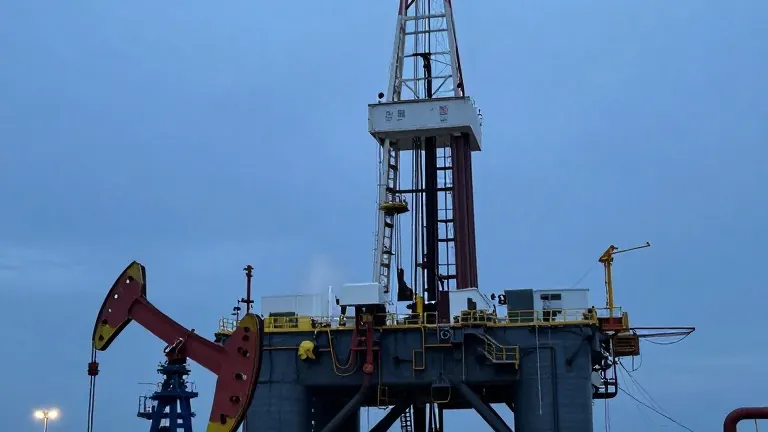
President Donald Trump announced on Tuesday that his administration is ending the Biden-era regulation designed to reduce methane emissions from oil and gas drilling. The policy shift removes specific compliance requirements for energy companies and cancels a fee structure that was intended to penalize high levels of gas leakage.
During a campaign rally in Lubbock, Texas, Trump stated that the termination of the rule would save consumers and energy producers $45 billion in costs. He further claimed the move would unlock 210 million barrels of oil, a volume equivalent to approximately 10 days of U.S. petroleum consumption. The administration argues that these changes will lower fuel prices and stimulate domestic production.
EPA Administrator Lee Zeldin previously outlined the changes last month, noting that the agency would eliminate its Super Emitter Program. This program required companies to investigate and repair major methane releases from oil and natural gas facilities. Zeldin also indicated that the agency would set less restrictive standards for small oil and gas wells. He maintained that the rule would have cost the industry $18 billion and was holding back the U.S. energy sector.
Methane is a potent greenhouse gas, responsible for roughly a third of global warming emissions according to scientific estimates. Oil and gas operations are the largest industrial source of this gas, which leaks from equipment or is burned off as a waste product. While the gas is invisible, it is far more potent in the short term than carbon dioxide.
The Biden administration finalized the rule in 2024, with officials projecting it would prevent an estimated 58 million tons of methane emissions by 2038. The rule was designed to regulate both new and existing wells, a change from previous regulations that focused only on new infrastructure. It specifically targeted smaller wells that produce 6% of the nation’s oil and gas but account for up to half of all methane emissions from those fields.
Federal officials under the previous administration estimated the rule would yield $98 billion in benefits by 2034. These projections were based on calculations of the social costs of greenhouse gas emissions on public health and the environment. Trump’s EPA has rejected this approach to valuation.
The rule was originally coordinated with a methane fee approved in the 2022 climate law. This fee would have levied a charge of up to $1,500 per metric ton of methane on producers that exceeded specific emission levels. It marked the first time the U.S. government directly imposed a fee on greenhouse gas emissions. Congress repealed this fee weeks after Trump took office.
Environmental groups have criticized the rollback, arguing it allows companies to continue releasing gas that could otherwise be captured and used. Fred Krupp, president of the Environmental Defense Fund, described the move as a free pass for companies at the expense of American consumers. He stated that the EPA should be fighting the waste rather than making it easier.
The administration has been methodically dismantling climate policies enacted under former President Joe Biden. Recent actions include revoking a scientific finding central to U.S. greenhouse gas action, lowering vehicle fuel economy standards, and moving to repeal emission restrictions for coal and natural gas power plants. The previous attempt to rein in methane under former President Barack Obama was scaled back during Trump’s first term.
Source: HuffPost
More Business · Customer Complaints · Report a business · Got a Story?