El-Sayed seeks stability as Stevens endorsement rocks Michigan Senate race
The defection of a former rival has forced Michigan Democrats to refocus on voter turnout just days before the midterms.
By Luca Stewart ·
The Michigan Senate race entered its final days with a fractured Democratic base.
Senate nominee Abdul El-Sayed and party leaders moved quickly on Monday to refocus attention on Election Day turnout. This effort followed a dramatic turn on Sunday when Rep. Haley Stevens endorsed Republican candidate Mike Rogers.
Stevens appeared with Rogers at Perfecting Church in Oakland County and announced her support shortly after the service. The move prompted her expulsion from the state Democratic Party and drew sharp criticism from allies. She had previously lost the August primary to El-Sayed by approximately 14,000 votes.
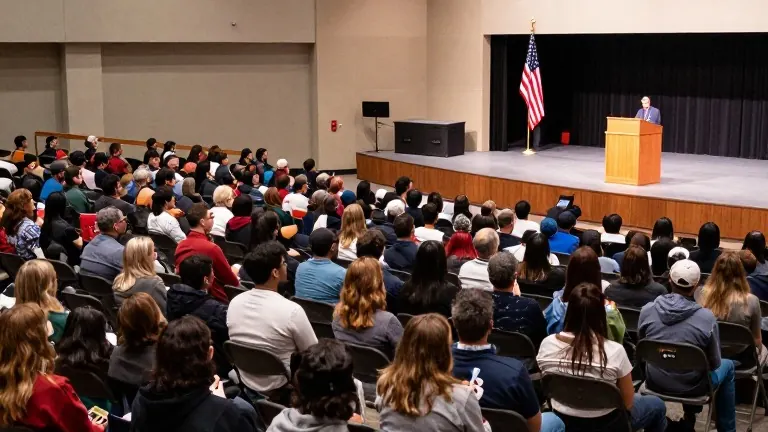
At a rally on Monday morning at Eastern Michigan University, El-Sayed avoided direct discussion of the controversy. He emphasized that the campaign centers on voters rather than personal dynamics. When asked how supporters should view the Stevens endorsement, he urged them to go vote. He noted that controlling the outcome is the only action within their power.
Massachusetts Sen. Elizabeth Warren and El-Sayed’s grandparents joined the event. More than 2.3 million Michigan voters had already cast ballots as of Monday. The regular early in-person voting period ended on Sunday, with polls reopening statewide on Tuesday. In the 2022 midterms, nearly 4.5 million people voted in the state.
Lori Goldman, a Democratic organizer in Oakland County, noted that while about half of expected voters had already voted, the drama could still influence the remainder. She described the potential impact on undecided voters as substantial.
Voters in Stevens’ district expressed mixed reactions to the endorsement. Derryl Reed, who voted for Stevens in the primary, said the move might mobilize support for El-Sayed due to anger. Cassaundra Sims, a Black resident of West Bloomfield, described the endorsement as shocking and disappointing. She said Stevens had shown she was not someone the Black community could trust.
Brian Butler of Bloomfield Hills, who had already voted, believed Stevens did the right thing. He cited the treatment of Jewish people as a factor in her decision. The Rogers campaign touted the endorsement as a major political win. Rogers stated that Stevens only informed him of her support after the church service. He called her decision an act of courage and predicted the Republican ticket would surprise some voters.
For Democrats, the defection exposed ongoing divisions over El-Sayed’s positions on Israel and the war in Gaza. Party leaders said the endorsement would energize their base. El-Sayed raised $2.4 million on Sunday, marking his largest fundraising day of the campaign. Michigan Democratic Party Chair Curtis Hertel said the event would galvanize Democrats without changing the fundamental dynamics of the election.
Critics within the party voiced strong dissatisfaction. Debbie Rosenman, who leads two Democratic organizations in southeast Michigan, reported hearing fury from local members who feel betrayed. Adrian Hemond, a Democratic strategist who supported Stevens, called the endorsement colossally stupid. He argued the move stemmed from personal animosity rather than policy differences. Rep. Debbie Dingell, a senior figure close to Stevens, said she had been worried about the congresswoman all week. Dingell described Stevens’ recent remarks as painful to watch and noted that Stevens had previously assured her the dispute would not end her support for El-Sayed.
Source: KSAT-TV