Trump's $5,000 Dividend Promise Meets Skepticism After Midterm Losses
Democrats won a historic sweep of Congress, but the president's Dallas pledge of a universal check remains a fiscal puzzle for the new majority.
By John Laurent ·
President Donald Trump promised a $5,000 payment to every American adult if Republicans retained control of Congress, a pledge that has now become a subject of intense scrutiny following a decisive Democratic victory. At the Republican Midterm Convention in Dallas last week, Trump declared that if his party kept the House and Senate, he would issue a dividend to every adult citizen. He told the crowd, 'If the Republicans win, you win with us and you get $5,000.' The promise was designed to capitalize on what he described as the country's tremendous economic success and the revenue generated by his administration's tariff policies.
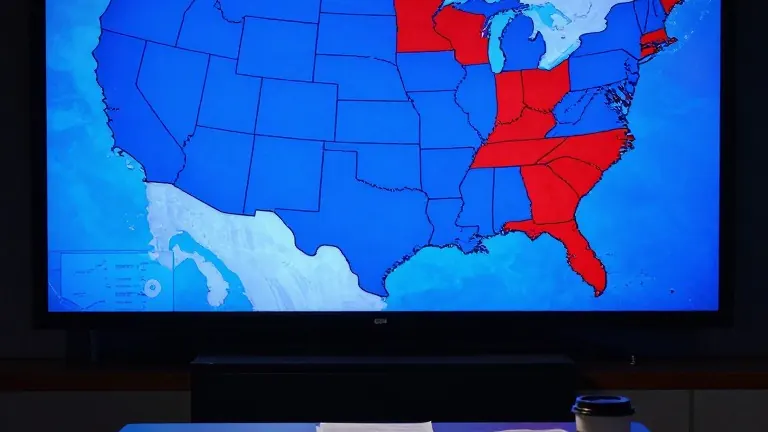
The election results, however, have shifted the political landscape dramatically. According to the Associated Press, Democrats have secured a majority in both the U.S. Senate and the U.S. House of Representatives. This outcome is a stark rebuke to the Republican Party and a direct challenge to the president's second-term agenda. With Democrats now holding the gavel in both chambers, the path to funding Trump's promised checks becomes significantly more complicated. The new Democratic leadership is poised to scrutinize the administration's spending plans, including this multi-trillion dollar proposal.
House Speaker Mike Johnson, who led the Republican effort to hold onto the House, stated Sunday that the dividend requires congressional approval. Johnson told reporters that he would assume the president needs Congress to act, calling it a creative idea. He pledged that he would work to get the proposal through despite the small Republican margin they had. However, Johnson also noted that the president later told CBS News Texas that he did not think Congress would need to authorize the payments, creating a slight discrepancy in the stated process for funding the checks.
Bipartisan criticism of the plan has mounted in the days since the convention. Texas Congressman Chip Roy, a Republican, wrote on social media that dependency is evil and soul-sucking in all its forms, questioning the long-term implications of such a large payout. Democratic leaders have also weighed in, with Sen. John Fetterman making a surprise video appearance at the Dallas convention to introduce his colleague. While Fetterman praised the president for working with Democrats, the broader Democratic message has focused on the need for fiscal responsibility and oversight of the administration's spending.
PolitiFact has analyzed the feasibility of the $5,000 dividend and found that the biggest payment is far from certain. The fact-checkers noted that the administration has announced no formal plan for the checks and that fiscal experts cast doubt on the plan during a time of existing economic challenges. The White House press release provided few details on how Americans would actually receive the money, leaving many questions unanswered about the logistics of such a massive distribution.
The cost of the dividend is a major point of contention. The U.S. Census Bureau estimates there are about 245 million adult U.S. citizens, meaning the program would cost approximately $1.2 trillion. This would place a significant strain on the federal budget, which is already facing a nearly $1.8 trillion annual deficit. Kenneth Rogoff, a former chief economist at the International Monetary Fund and a Harvard University professor, warned that the U.S. is already running an unsustainable deficit. He argued that this spending would blow up the debt and increase the odds of a debt crisis in the coming years.
Funding the checks remains a key puzzle. Trump cited tariff revenues as a potential source, and Vice President JD Vance told Fox News that some of the money would come from that revenue. However, the Tax Foundation reported that U.S. tariff revenue would not be able to cover the cost of the checks. Erica York, a senior economist at the Tax Foundation, wrote that the cost of the $5,000 checks would spend almost all the revenue that the new tariffs are projected to bring in over a decade. This mathematical challenge has led many analysts to question whether the promise can be kept without new borrowing or tax changes.
The legal landscape for the promise is also under review. Election law expert Rick Hasen, a professor at UCLA, stated that while the president does not have the power to do this on his own, he would likely have a strong First Amendment defense if a state tried to prosecute him for the promise. Hasen compared it to other campaign promises, such as cutting taxes or funding social programs, noting that politicians make these kinds of commitments all the time. Richard Painter, a government ethics expert at the University of Minnesota, agreed, saying that candidates are allowed to make such promises. He drew a parallel to George McGovern's 1972 campaign promise to give every American $1,000 a year, a pledge that was widely viewed as optimistic.
The promise of the Trump dividend is part of a broader pattern of financial pledges by the administration. In November 2025, Trump claimed his tariffs were bringing in trillions and promised a dividend of at least $2,000 per person, a check that never went out. In early 2026, more than one million U.S. military service members received a warrior dividend of $1,776. Additionally, the administration announced one-time $90 payments for some Medicare Part B enrollees and $500 refunds for some Affordable Care Act enrollees. These various payments highlight the administration's strategy of using direct cash transfers to bolster support among key voter demographics.
As the new Democratic Congress prepares to take office, the focus will turn to oversight and the budget process. The Associated Press reported that the midterm electorate was deeply unhappy with the country's direction, with about three-quarters of voters feeling angry or dissatisfied. The cost of living and government corruption were cited as crucial issues. With Democrats now in control of both chambers, they are expected to push for a thorough review of the administration's spending priorities. The $5,000 dividend, while a prominent feature of the campaign, now faces the reality of a Congress that may prioritize deficit reduction and economic stability over a large one-time payout.