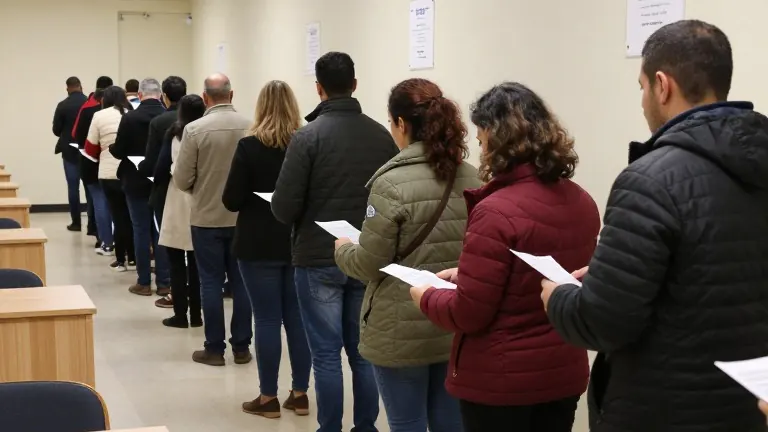
Israel votes in tight race to end Netanyahu's war-era rule
With polling showing a narrow margin, the outcome hinges on whether Arab-led parties can secure a majority for either candidate.
By Thomas Schneider ·
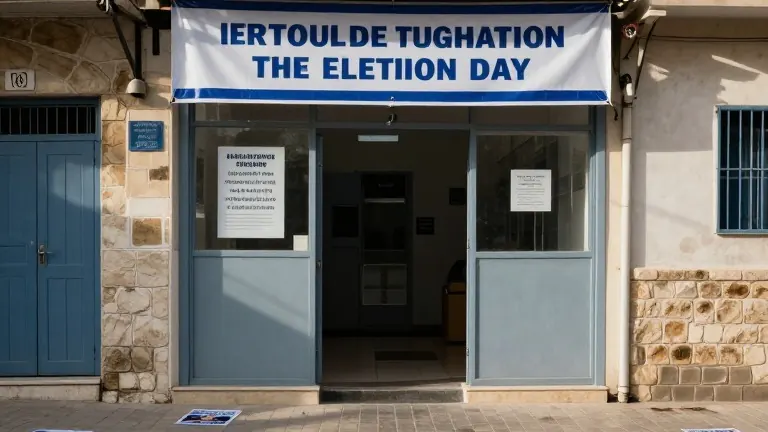
Polls opened Tuesday morning in a country fractured by three years of conflict.
Israelis cast ballots to determine if Prime Minister Benjamin Netanyahu will remain in office or yield to a coalition of rivals. Opinion polls indicate the race is tight, pitting the longtime leader against former military chief Gadi Eisenkot.
The parliamentary system requires a coalition to govern, as no single party has ever secured an outright majority. In this specific election, nonaligned Arab parties are pushing for high voter turnout. This dynamic creates a scenario where neither Netanyahu's religious and ultranationalist bloc nor the anti-Netanyahu alliance may reach the necessary threshold. If that happens, weeks of negotiations could follow before a leader is declared, with Arab-led parties potentially acting as kingmakers.
Tensions with Iran hang over the voting process. Netanyahu intensified threats against Tehran in the days leading up to the vote. In a video released this week, he stood beside a missile-defense battery and warned that an attack on Israel would result in a devastating blow to Iran. This rhetoric adds a layer of geopolitical urgency to a domestic contest.
The election marks the first national vote since the October 7, 2023, attack by Hamas. In Tel Aviv, families of victims and former hostages observed a moment of silence before polls opened. Yona Adam, whose daughter Mapal Adam was killed on that day, urged voters to remember those whose voices are gone. The vote serves as a referendum on both Netanyahu's leadership and the fundamental character of the state, specifically whether it will lean toward religious and nationalist forces or liberal and secular values.
International pressure has mounted on Israel since 2023. Traditional allies have criticized the country's conduct in Gaza and the West Bank, where settler violence has intensified. Public support among Americans has dropped, and European partners have imposed sanctions in recent months. For many Israelis, this election offers a chance to redefine the country's course after a turbulent four-year term.
Supporters of Netanyahu view him as a steady hand who has guided Israel through multiple wars. They credit him with protecting Jewish identity and checking the power of the judiciary. His detractors argue that he is a polarizing figure who prolonged the Gaza war and the hostage crisis for political gain. They accuse him of undermining the independent judiciary and weakening democratic norms, including by allowing ultra-Orthodox men to avoid compulsory military service.
Gadi Eisenkot, whose son and two nephews were killed in Gaza, is viewed by his backers as a leader with strong security credentials. His likely governing partners have pledged to improve Israel's international standing. They also vow to conscript ultra-Orthodox men and bolster the independence of the judiciary, positioning their alliance as a bulwark against what they describe as creeping illiberalism.
Source: KSAT-TV