Netanyahu Faces 2026 Vote as Right-Wing Blocs Define Israel's Future
Israelis vote Tuesday in the first general election since the 2023 Hamas attack, with both major camps embracing right-wing platforms while excluding Arab-led parties from coalition talks.
By Luca Stewart ·

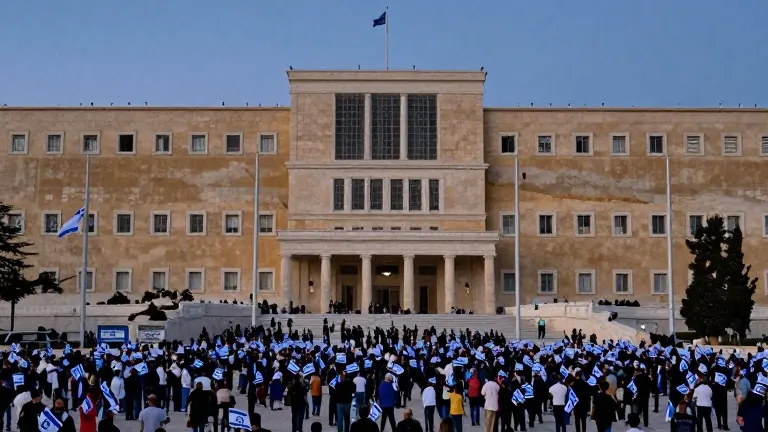
Israelis cast ballots on Tuesday in a general election that marks the first vote since the Hamas-led attack of October 7, 2023. The contest is described by observers as a pivotal moment for the country's political direction.
Prime Minister Benjamin Netanyahu, Israel's longest-serving leader, seeks to extend his tenure after forming the country's most right-wing governing coalition. His government includes far-right ultranationalist and ultra-Orthodox parties, and he faces a self-styled Zionist opposition bloc that also embraces a right-wing approach to national challenges.
The campaign focused on accountability for security failures before the 2023 attack, disputes over military service for the ultra-Orthodox, and the exclusion of Arab-led parties. Netanyahu, who is on trial for bribery, fraud, and breach of trust, and wanted by the International Criminal Court for war crimes in Gaza, fights for political survival against candidates who largely frame their disagreements as questions of competence and timing rather than fundamental policy shifts.
Analysts note that the rightward shift accelerated under Netanyahu's current government, which attempted to strip the Supreme Court of review powers and flouted rulings on conscripting the ultra-Orthodox. Ministers Itamar Ben-Gvir and Bezalel Smotrich supported these judicial changes while overseeing increased violence in the West Bank.
Yossi Mekelberg, a senior fellow at Chatham House, stated that the vote determines whether Israel retains a functioning democracy or becomes one in name only. He noted the choice involves maintaining the occupation of the West Bank or annexing it entirely, a suggestion made by figures within the government.
More than 74,000 people have been killed in Gaza, according to figures cited in the election coverage. None of the mainstream candidates discussed including Arab-led parties in a potential coalition. Daniel Levy, a former government adviser, said the election is not a referendum on the war in Gaza because no major party argues the conflict was a bad thing, while others view it as a consensus issue among Zionist parties.
Ahron Bregman, an analyst at King's College London, suggested that if an opposition candidate like Gadi Eisenkot becomes prime minister, the initial change would be a calmer political atmosphere. However, he cautioned that any new government would reflect the sharp rightward turn Israel took after October 7, with the ultra-Orthodox parties likely to remain in power regardless of the outcome.
Source: Al Jazeera