
Exit polls show Israeli electoral deadlock
Both Netanyahu and Eisenkot fail to secure a majority, complicating coalition talks and raising the stakes for small parties.
By Thomas Schneider ·
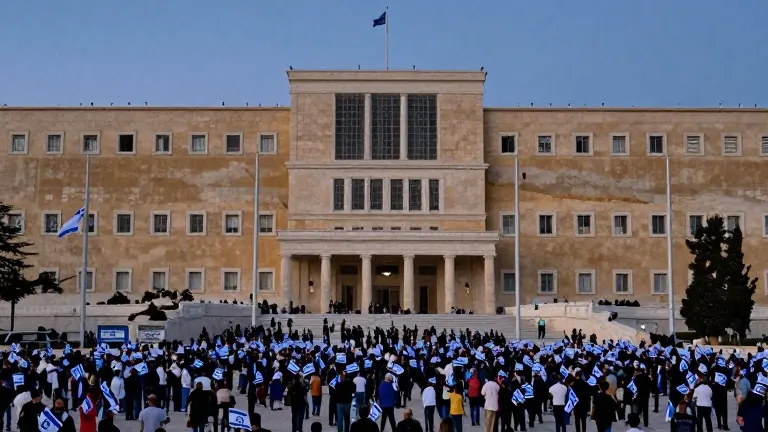
Voters in Israel returned to the polls on Tuesday with high expectations, yet the immediate results suggest a fragmented political market.
Exit polls released Tuesday night by Channels 11, 12, and 13 indicate that neither Prime Minister Benjamin Netanyahu nor challenger Gadi Eisenkot has secured the 61 seats required to form a government.
The opposition bloc, which includes Yashar, B’Yachad, Yisrael Beytenu, and the Democrats, is projected to win between 50 and 53 seats. Netanyahu’s camp is expected to take roughly 50 seats, leaving both sides short of a clear mandate.
Likud, Netanyahu’s party, remains the largest single entity with a projection of 24 to 25 seats. Eisenkot’s Yashar party trails with an estimated 21 to 23 seats, making it the strongest challenger in the race.
Arab parties are positioned as critical swing votes, with the Joint List and Ra’am expected to win a combined 17 to 18 seats. Despite their numerical importance, opposition leaders have largely ruled out governing with these parties, excluding only the Democrats' Yair Golan.
Two small right-wing parties, People of Israel and The Reservists-Economic, are projected to fall below the 3.25 percent electoral threshold. Their likely exclusion further limits Netanyahu’s options for building a right-leaning coalition.
Voter turnout reached its highest level since 1973 according to Central Elections Committee records. The lack of a winner forces leaders to consider minority governments or a unity pact, though Eisenkot has rejected serving under Netanyahu in a rotation. Official results will be determined only after all ballots are counted.
Source: The Jerusalem Post