Democrats take Congress as voters reject Trump's redistricting bid
A sweeping Democratic surge has secured majorities in both chambers, overturning the Republican map and setting the stage for a new era of oversight.
By Thomas Schneider ·
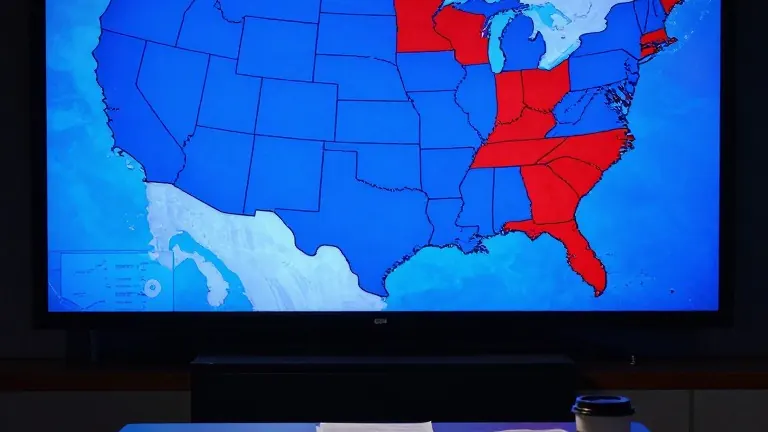
The United States has entered a new political era as Democrats secured decisive control of both the House of Representatives and the Senate, a result that fundamentally reshapes the balance of power in Washington. According to Ballotpedia, Democrats had won 228 House seats and 20 Senate seats as of the morning of November 4, a margin that far exceeds the numbers needed for a majority in either chamber. This outcome represents a sharp rejection of the Republican Party's midterm strategy, which relied heavily on a president who urged voters to treat the election as if he were on the ballot.
The victory is particularly significant because it occurred despite a concerted effort by Republicans to redraw congressional districts across eight states. President Donald Trump had urged these redistricting efforts to secure a slim House majority, but the plan ultimately fell flat. As former Attorney General Eric Holder noted, the Republican redistricting plan was systematically dismantled by voters who chose to elect a new Democratic majority. The AP Voter Poll indicated that about six in ten voters disapproved of how Trump was handling the presidency, a sentiment that proved difficult for Republican candidates to overcome.
In the House, Democrats gained a net 27 seats, moving from a position where they held 215 seats to a commanding lead of 228. This shift allows the party to reassert itself as a coequal branch of government, ready to challenge the administration. House Democratic Leader Hakeem Jeffries, who is expected to become the first Black speaker of the House, told voters, We hear you. He promised to work hard to deliver on the dramatic change that you deserve. The new leadership team faces the immediate task of managing a class of newcomers while addressing the economic anxieties that drove voters to the polls.
The Senate race saw an even more dramatic turnaround, with Democrats gaining seven seats from the Republicans. Ballotpedia reported that seven U.S. Senate seats changed party hands in Iowa, Kansas, Maine, North Carolina, Ohio, South Carolina, and Texas. These wins in historically red states mark a significant departure from recent political norms. For instance, South Carolina and Kansas had not elected a Democratic senator since 1932. The control of the Senate provides Democrats with a powerful tool for oversight, including the ability to issue subpoenas and conduct investigations into the administration's actions.
The cost of living emerged as the central theme of the election, with roughly half of voters citing it and government corruption as crucial to their vote for Congress. The AP Voter Poll found that about 8 in 10 voters said inflation had caused a severe or moderate financial hardship for their households. Democrats are already outlining a 100-day agenda that includes efforts to lower the costs of gas and groceries and to reverse cuts to healthcare programs. This focus on tangible economic relief is intended to address the frustration that led to the high turnout and the decisive shift in power.
The redistricting battle, which had been a focal point of the campaign, ultimately failed to protect Republican incumbents. In states like Texas, Florida, and Alabama, the new maps did not yield the expected gains. In Texas, for example, Democrats unseated Republican Rep. Monica De La Cruz in a district that was redrawn to favor the GOP. Similarly, in Florida, Democratic Rep. Jared Moskowitz won reelection in a district that Republicans had targeted, stating that they spent $26 million trying to beat him and lit that money on fire tonight. These individual victories underscore the broader trend of voters prioritizing performance over partisan geography.
President Trump has taken a conciliatory tone in the wake of the results, suggesting he could work with the Democrats while warning of potential gridlock. He threatened to use his veto power to strike down their agenda, stating, I don't want to be just sitting there for two years vetoing everything. Meanwhile, Vice President JD Vance publicly distanced himself from the president's defense of the Iran war, a conflict that many voters viewed as a key factor in their decision to vote for Democrats. The war, combined with soaring fuel prices, contributed to the broad dissatisfaction that defined this election cycle.
The Republican Party now faces a reckoning as it adjusts to its new status in Congress. House Speaker Mike Johnson has indicated he will not seek reelection as the party leader, a move that signals a shift in the party's direction. The loss of the Senate also ends an era of rapid judicial appointments for the party, which had used its majority to reshape the federal courts. With the new leadership set to take office on January 3, 2027, the political landscape in Washington is poised for a period of intense scrutiny and legislative action.
For voters, the results offer a sense of relief after a campaign dominated by concerns over the economy and the state of democracy. The AP Voter Poll showed that most voters felt frustrated with the way things were going, with about three-quarters saying they feel angry or dissatisfied with the country's current trajectory. The new Democratic majority now has the responsibility to translate this mandate into policy, focusing on the issues that voters identified as most important. The coming months will test whether the party can deliver on its promises and maintain the momentum that carried it to this historic victory.
The election also highlighted the changing dynamics of the American electorate, with significant shifts among Hispanic voters and in suburban areas. The AP Voter Poll indicated a substantial shift in Hispanics moving away from Republicans compared to the previous cycle. This demographic trend played a role in the Democratic gains in key districts across the South and Southwest. As the new Congress prepares to convene, the focus will be on how effectively the party can address the concerns that drove this unprecedented wave of voter support.