Cuban Foreign Minister Calls U.S. Ambassador a Liar During UN Session
A physical confrontation between diplomatic envoys preceded the annual General Assembly vote on the U.S. embargo, which has passed by wide margins for 34 years.
By Luca Stewart ·
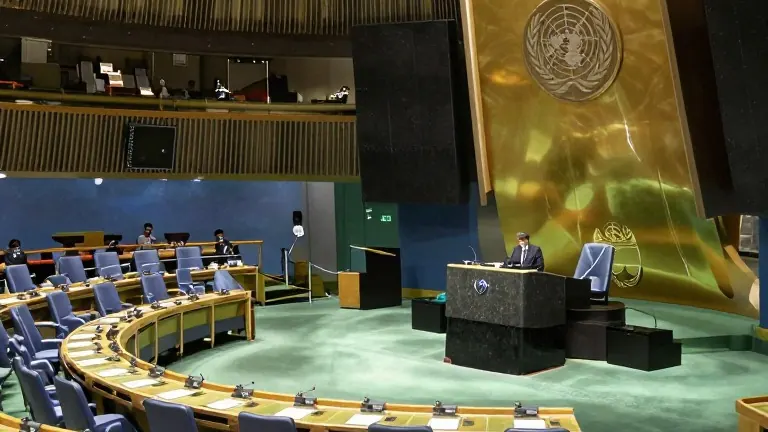
The United Nations General Assembly has convened for its annual session to debate the economic relationship between Washington and Havana. On Tuesday, U.S. Ambassador Mike Waltz and Cuban Foreign Minister Bruno Rodríguez engaged in a heated exchange on the assembly floor that disrupted the formal proceedings leading up to Wednesday's vote.
The vote concerns a resolution condemning the U.S. embargo on Cuba. This non-binding measure has been presented to the 193 member states for 34 consecutive years. In the most recent tally, the resolution passed with 165 votes in favor, seven against, and 12 abstentions. While a similar margin is expected this year, analysts note that the Trump administration's active efforts to influence the outcome may lead to increased opposition or abstentions from key nations.
The diplomatic friction occurred as Waltz began criticizing the Cuban government. Rodríguez walked to the podium to request a point of order from the session's presiding officer. He interrupted Waltz to call the U.S. envoy a liar. U.N. security staff and other personnel moved to separate the two officials as the exchange escalated.
Waltz addressed the assembly while security attempted to manage the situation. He stated, “This individual needs to back away from this podium. He’s not going to intimidate me in the United States of America.” He added, “You understand who you’re dealing with? This is America. Back up.”
Rodríguez responded to the incident on the social media platform X. He noted that Waltz was speaking at the U.N., not at a White House national security meeting. The Cuban official described the U.S. actions as a desperate attempt to justify economic aggression and a criminal energy blockade.
This public dispute follows a similar interaction earlier in the week. U.S. diplomat Ernesto Soberón Guzmán clashed with Waltz outside a U.S.-hosted panel. That panel featured Cuban dissidents and former prisoners who discussed allegations of government oppression. These events mark a shift away from the traditional diplomatic decorum typically observed at the U.N.
The political tensions coincide with Cuba's deepening financial crisis. President Donald Trump has intensified the economic campaign against the island. Last week, he suggested that U.S. warships might stop in Cuba on their return from the Iran war. In late January, Trump announced tariffs on any country selling or providing oil to Cuba. This move has effectively cut off fuel supplies, causing widespread power outages that disrupt cooking, water supply, and telecommunications.
The U.S. embargo was first imposed in 1960. That action followed Fidel Castro's revolution, which removed dictator Fulgencio Batista and nationalized properties owned by U.S. citizens and corporations. The economic restrictions have shaped the Caribbean nation's financial stability for decades.
The General Assembly is scheduled to cast its vote on Wednesday. The outcome will reflect current global opinion on the policy, even though the resolution carries no legal force. The debate continues to center on the impact of the maximum pressure policy and the specific effects of the recent fuel restrictions.
Source: KSAT-TV