Trump's $5,000 Dividend Fizzles as Democrats Seize Congress
The president's promise of cash checks for Republicans holding power has been overtaken by events after a sweeping Democratic victory.
By Luca Stewart ·
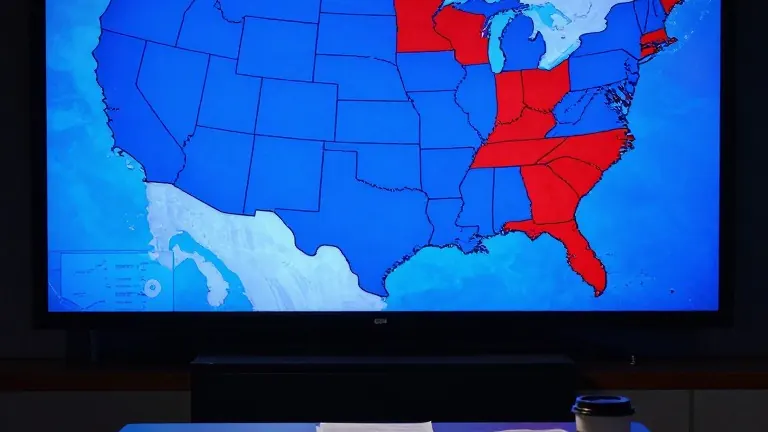
President Donald Trump's promise to send $5,000 checks to every American adult if Republicans retained control of Congress has effectively become moot following Tuesday's election results. Democrats have won control of both the House and the Senate, a decisive shift that renders the conditional nature of the pledge largely irrelevant for the next two years. The promise, which was a centerpiece of the Republican midterm convention in Dallas, now faces a divided government that may struggle to pass the necessary legislation.
During a nearly two-hour speech at the Republican Midterm Convention, Trump told the crowd that if Republicans won the House and Senate, voters would receive a payment he called the Trump Dividend. He stated that the United States was experiencing tremendous economic success and that the government was taking in record amounts of money. The president compared the proposal to corporate dividends paid to shareholders, suggesting that the nation's wealth should be shared with its citizens.
The proposal drew immediate scrutiny from fiscal experts and lawmakers who questioned how the government would fund the payments. The White House indicated that tariff revenues might be a source of funding, but the Tax Foundation noted that the new tariffs are projected to generate significantly less revenue than the cost of the checks. Erica York, a senior economist at the Tax Foundation, wrote that the cost of the payments would consume almost all the revenue projected from the new tariffs over a decade. This raised concerns about the sustainability of the plan in a budget already facing a nearly $1.8 trillion annual deficit.
House Speaker Mike Johnson, who is not seeking reelection as House Republican leader, acknowledged the complexity of the proposal. He stated that congressional approval would be required for the payments to proceed. Johnson described the idea as creative and pledged that Congress would work to find consensus on the issue. However, with Democrats now holding majorities in both chambers, the path for this Republican-backed spending bill becomes significantly more challenging. The new Democratic leadership has signaled a focus on oversight and cost-of-living issues rather than new spending initiatives tied to election pledges.
Bipartisan criticism of the plan emerged even before the election results were finalized. Some Republicans questioned the price tag and the precedent of linking a universal cash payment to an election outcome. Texas Congressman Chip Roy wrote that dependency is evil and soul-sucking in all its forms, suggesting a skeptical view of large government payouts. Democrats argued that the promise was an attempt to buy votes by offering a financial incentive to swing voters. The AP Voter Poll found that the economy and affordability were top concerns for voters, making the promise of direct cash payments particularly salient in the final weeks of the campaign.
PolitiFact analyzed the proposal and found that the biggest payment is far from certain. The fact-checkers noted that the administration had announced no formal plan for the checks and that fiscal experts cast doubt on the feasibility during a time of existing economic challenges. The payout would first require Congress to approve the legislation. Senator Bernie Moreno of Ohio said he would introduce a bill to fund the proposal, but analysts noted that such legislation might struggle to attain the necessary supermajority in the Senate, especially with a Democratic majority now in place.
The promise follows a pattern of similar financial pledges by the administration that did not fully materialize. In November 2025, Trump promised $2,000 tariff dividend checks, but those payments were never distributed. Earlier in 2026, the administration provided $1,776 checks to military service members, a move that was more narrowly targeted and easier to fund. The $5,000 dividend was a more ambitious step that aimed to broaden the appeal of the Republican ticket. With the election now over, the administration must decide whether to pursue the legislation or allow the promise to fade into the background of the campaign.
Democratic leaders are already outlining their own agenda, which includes efforts to lower the costs of gas, groceries, and other goods. House Democratic Leader Hakeem Jeffries, who is expected to become the next Speaker of the House, has pledged to work hard to deliver on the dramatic change that voters deserve. The new majority has indicated a strong interest in reversing cuts to healthcare programs and launching a robust oversight agenda. This focus on immediate cost relief contrasts with the Trump Dividend, which was framed as a reward for economic success rather than a solution to current price pressures.
The political landscape has shifted dramatically, with Democrats gaining control of state governments in multiple states as well. This broader sweep of power gives the new Democratic Congress more leverage in negotiations with the White House. The president has already suggested a conciliatory tone, indicating he could work with the Democrats, but he has also warned of gridlock. The fate of the $5,000 dividend will likely be a test of this new dynamic. If the administration pushes for the payment, it will face a Congress that is focused on fiscal responsibility and holding the executive branch accountable.
Voters in key states like Texas, where Democrats took control of the state House, were particularly attentive to economic messages. The redistricting battles that preceded the election highlighted the importance of every vote, but the final results suggest that voters were more concerned with their daily financial realities than with the prospect of a one-time check. The AP Voter Poll showed that three-quarters of voters said the economy is not so good or poor, and about eight in 10 said inflation has caused financial hardship. These findings underscore why the promise of a $5,000 payment was so prominent in the campaign, even as the mechanism for delivering it remains unclear.