Trump's $5,000 Dividend: A $1 Trillion Bet on Midterm Victory
The president’s pledge to send checks to every adult if Republicans hold Congress faces steep fiscal hurdles and bipartisan skepticism as polls open.
By Luca Stewart ·

President Donald Trump has staked the 2026 midterm elections on a bold financial promise that could cost the federal government more than $1 trillion. At the Republican Midterm Convention in Dallas, the president pledged a "Trump Dividend" of $5,000 to every adult U.S. citizen, a payment strictly conditioned on his party retaining control of both the House of Representatives and the Senate. The announcement has ignited debate over whether this is a viable economic policy or a strategic attempt to buy votes in a tightly contested race where Democrats need a net gain of just three House districts to seize the majority.
The promise was made during a nearly two hour speech where Trump described the nation's "tremendous economic success" as the justification for the payout. He compared the dividend to corporate cash distributions to shareholders and noted that his administration had already sent $1,776 checks to military service members. However, the White House has provided few details on how the money would be delivered or exactly who would qualify, leaving voters to weigh the promise against their own struggles with high prices and an unpopular war with Iran.
Speaker Mike Johnson, who is leading the effort to keep the GOP majority, confirmed on Sunday that the payments require congressional approval. "I would assume, yes, he'd need Congress to act, and that's a creative idea," Johnson said. He pledged to work through the process despite the slim Republican margin, calling Trump the "big ideas president." This statement stands in contrast to Trump's own comments to CBS News Texas, where he suggested Congress might not need to authorize the payments, though he did not specify how he could spend over a trillion dollars without lawmakers' sign off.
The fiscal implications are significant. According to the U.S. Census Bureau, there are approximately 245 million adult U.S. citizens, meaning the payout would cost about $1.2 trillion. This sum would place further strain on the country's nearly $1.8 trillion annual budget deficit. Erica York, a senior economist at the Tax Foundation, noted that the cost would spend almost all the revenue that new tariffs are projected to bring in over a decade. The administration has pointed to tariff revenues as a potential funding source, but the One Big Beautiful Bill Act did not include a separate tariff dividend, leaving a gap in the legislative plan.
Bipartisan criticism has emerged regarding the mechanics and timing of the promise. Texas Congressman Chip Roy, a Republican, wrote on social media that "Dependency is evil and soul-sucking in all its forms," questioning the price tag of the payout. Democratic figures have pointed to the lack of a formal plan, noting that the White House press release offered no details on distribution. The timing is also under scrutiny, as the payment is only triggered if Republicans win both chambers, a scenario that would give the GOP full control of the legislative agenda for the final two years of Trump's term.
PolitiFact has analyzed the promise and found that the biggest payment is far from certain. The fact checker noted that while the idea is constitutionally protected as a campaign promise, the ability to execute it is complicated by the need for a 60 vote supermajority in the Senate to overcome a potential filibuster. Senator Bernie Moreno of Ohio said he would introduce legislation to fund the proposal, but analysts suggest such a bill is unlikely to attain the necessary support in a divided government, especially if Democrats hold the Senate.
The election landscape presents additional obstacles. Democrats are focused on the cost of living, with AP-NORC polling showing that about 7 in 10 Americans say the country is heading in the wrong direction. Most blame President Trump for high prices, and his approval rating stands at 35 percent. The new congressional maps in states like California, Florida, and Texas may also complicate the GOP's ability to maintain a majority, as some redistricted districts may not vote as initially drawn. The Republican money edge, bolstered by Trump affiliated groups and Elon Musk, has resulted in significant spending, with 88.1 percent of general election TV ad dollars going to states and districts Trump won in 2024.
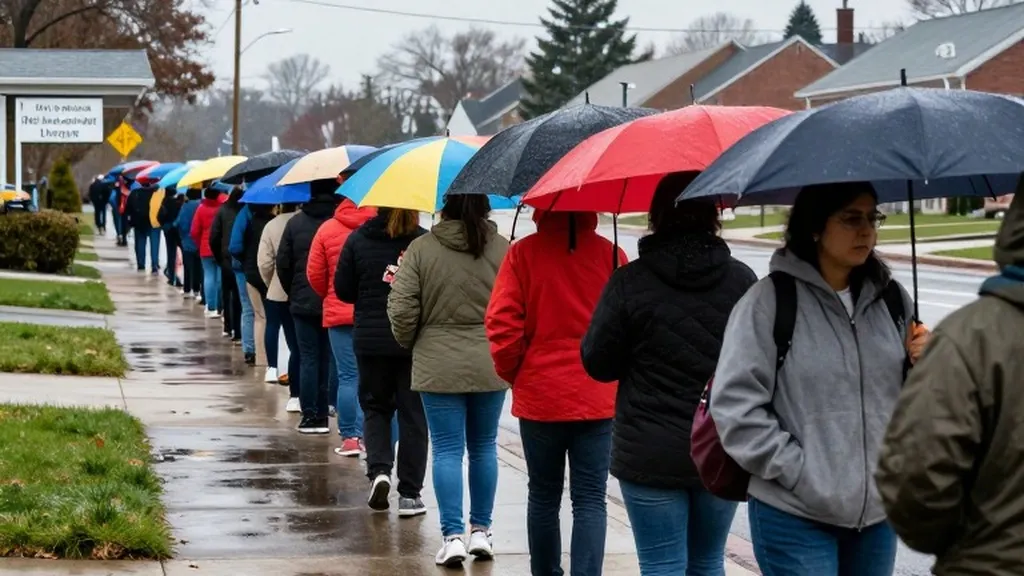
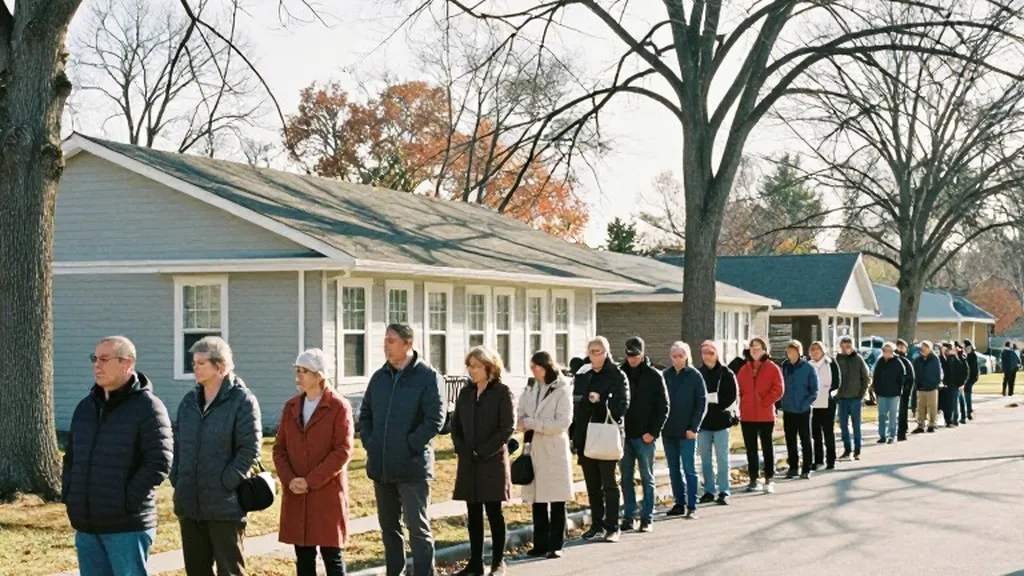
As voters head to the polls on Tuesday, the "Trump Dividend" serves as a central point of contrast between the parties. Republicans argue that the strong economy makes the payment "easy enough," while Democrats contend that the promise highlights the administration's focus on large checks over structural economic fixes. The outcome of the midterms will determine if the promise becomes policy or if it joins a list of previous pledges, such as the $2,000 tariff dividend and the DOGE checks, that never materialized.
The stakes extend beyond the immediate payout. A Democratic win in either chamber would trigger investigations and oversight, with House Democratic Leader Hakeem Jeffries outlining a 100 day agenda focused on the cost of living. Conversely, a Republican hold would allow them to pursue the dividend and other priorities without immediate legislative obstruction from the opposition. The election is ultimately a referendum on the president's second term, with voters deciding whether to reward the administration's record or seek change in a Congress that controls the nation's wallet.
In the end, the $5,000 check remains a conditional reward rather than a guaranteed benefit. The White House has stated that the president "has consistently proven his doubters wrong," but the path from promise to payment involves complex legal and financial hurdles. As polls close across the country, the focus shifts to whether the American people will vote for the continuation of the current administration's agenda or for a shift in power that could delay or dismantle the proposed dividend.